An Unimaginable Life
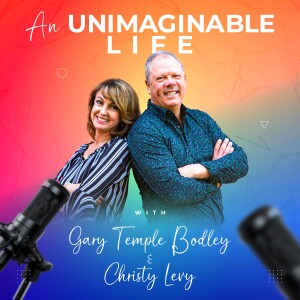
Christy is a one of the world’s most powerful mediums. In this podcast, Christy and channeler Gary Temple Bodley bring in those who have crossed over to share their nonphysical perspectives to tell us what’s really going on in our reality. The conversations are both fascinating and enlightening.







Episodes
3 days ago
3 days ago
53 min
Henri Nouwen and Rabindranath Tagore bring an unusually intimate message about worthiness, identity, courage, and the way fear interprets reality. This Dead Talk explores why limiting beliefs feel like truth, what healing is not, and how we can begin life through the eyes of our essence rather than the frightened identity.
Read about The Freedom Project 7-day Boosts here
Schedule a call with Christy to learn about The Freedom Project here
Schedule a call with Gary to learn about The Freedom Project here
Henri Nouwen was a Dutch Catholic priest, theologian, professor, and spiritual writer known for work centered on vulnerability, belonging, compassion, inner wounds, spiritual identity, and the experience of being deeply loved.
Rabindranath Tagore was an Indian poet, philosopher, composer, educator, artist, and Nobel laureate. He wrote extensively about consciousness, nature, humanity, divinity, freedom, beauty, and the relationship between the individual and the universal. He also famously renounced his British knighthood in protest after the Jallianwala Bagh massacre and wrote songs that became the national anthems of India and Bangladesh.
Aug 29, 2026
Aug 29, 2026
53 min
What if uncertainty isn't the obstacle preventing you from finding your path—but the very condition that allows the path to unfold? In this Dead Talk, Rachel Carson and Wangari Maathai arrive with an unexpected message about money, health, courage, receiving, inspired movement, and why clarity about the next step is far more useful than certainty about the destination.
Rachel Carson
Rachel Carson was an American marine biologist, writer, and conservationist best known for Silent Spring, the landmark book that brought widespread attention to the ecological dangers associated with pesticides such as DDT
Wangari Maathai
Wangari Maathai was a Kenyan environmentalist, political activist, and founder of the Green Belt Movement. She became the first African woman to receive the Nobel Peace Prize. Her work connected environmental restoration with poverty, women's empowerment, food security, health, democracy, and human dignity.
Read about The Freedom Project 7-day Boosts here
Schedule a call with Christy to learn about The Freedom Project here
Schedule a call with Gary to learn about The Freedom Project here
Aug 22, 2026
Aug 22, 2026
54 min
What if overwhelm isn't caused only by how much is happening, but by the belief that you must hold, process, understand, and resolve each experience before moving to the next one? In this deeply personal Dead Talk, John O'Donohue and Tove Jansson offer two beautifully complementary perspectives on grief, joy, unfinished experiences, identity, obligation, and the unexpected freedom of simply meeting the moment that is happening now.
Read about The Freedom Project 7-day Boosts here
Schedule a call with Christy to learn about The Freedom Project here
Schedule a call with Gary to learn about The Freedom Project here
Aug 9, 2026
Aug 9, 2026
49 min
What if the reason you feel stuck isn't because you don't know what to do—but because you're waiting for certainty before you move?
In this extraordinary Dead Talk, two of history's greatest poets—Matsuo Bashō and Rainer Maria Rilke—reveal why desire is not a weakness, uncertainty is not a flaw, and the path never appears before the journey begins. If you've ever questioned your purpose, struggled to trust your intuition, or waited for the "right time," this conversation may completely change how you experience your life.
Read about The Freedom Project 7-day Boosts here
Schedule a call with Christy to learn about The Freedom Project here
Schedule a call with Gary to learn about The Freedom Project here
Aug 2, 2026
Aug 2, 2026
1 hr 14 sec
What if your greatest source of suffering isn't what happens to you—but the story you create afterward? In this fun and insightful Dead Talk, Gilbert K. Chesterton and Shams (Hafez) dismantle the illusions of seriousness, certainty, and separation, revealing that awakening isn't about escaping life but participating in it more fully. Through humor, paradox, and profound wisdom, they invite us to trade self-protection for curiosity, control for trust, and performance for wholehearted presence.
Read about The Freedom Project 7-day Boosts here
Schedule a call with Christy to learn about The Freedom Project here
Schedule a call with Gary to learn about The Freedom Project here
Jul 24, 2026
Jul 24, 2026
1 hr 6 min
What if time isn't something you move through, but something consciousness creates through perspective? In this mind-expanding Dead Talk, Henri Bergson and Jorge Luis Borges reveal why memory is alive, why inspiration may be the voice of future possibility, and why true freedom is never found by changing circumstances—it emerges by expanding awareness until new realities become visible. This conversation offers one of the deepest explorations yet of time, manifestation, and the creative power of perspective.
Read about The Freedom Project 7-day Boosts here
Schedule a call with Christy to learn about The Freedom Project here
Schedule a call with Gary to learn about The Freedom Project here
Jul 18, 2026
Jul 18, 2026
1 hr 4 min
What if the future isn't something you have to figure out—but something that's already calling you?
In this extraordinary Dead Talk, Hermann Hesse (Siddhartha, Steppenwolf, The Glass Bead Game) and St. Teresa of Ávila, come to reveal a radically different understanding of purpose, longing, and participation.
Hesse reflects that his lifelong search for truth, authenticity, and self wasn't really about finding answers—it was about following an inner longing that was always leading him into greater expansion. Teresa shares that her deepest spiritual journey wasn't about finding God, but eventually realizing she had spent years searching for the very presence that had been looking through her own eyes all along. Together, they explain that what we experience as curiosity, fascination, longing, delight, and desire are not distractions—they are the language through which life invites us forward.
Read about The Freedom Project 7-day Boosts here
Schedule a call with Christy to learn about The Freedom Project here
Schedule a call with Gary to learn about The Freedom Project here
Jul 10, 2026
Jul 10, 2026
52 min
What if the purpose of life isn't to figure everything out—but to fully participate in the mystery? In this delightfully unconventional Dead Talk, Richard Feynman and P.G. Wodehouse dismantle our obsession with certainty, control, and seriousness, revealing that true wisdom is found in curiosity, laughter, and wholehearted engagement with the present moment. Discover why confusion signals expansion, gratitude is a consequence of presence, and freedom begins when you stop trying to win the game and start enjoying enjoying it fully.
Read about The Freedom Project 7-day Boosts here
Schedule a call with Christy to learn about The Freedom Project here
Schedule a call with Gary to learn about The Freedom Project here
Jun 30, 2026
Jun 30, 2026
55 min
What if the greatest limitation in your life isn't your circumstances—but the identity you've spent years building and protecting? In this profound Dead Talk, Simone de Beauvoir and Sri Nisargadatta Maharaj reveal why true freedom isn't found by becoming someone better, but by becoming free enough to stop insisting you are any one thing. Together they uncover the hidden second half of the Hero's Journey, where identity softens, participation replaces self-protection, and life becomes an unfolding expression of consciousness rather than a role to defend.
Earlier this week, Christy and I appeared on the Jeff Mara podcast and Christy brought in Helen Keller. Listen here
Read about The Freedom Project 7-day Boosts here
Schedule a call with Christy to learn about The Freedom Project here
Schedule a call with Gary to learn about The Freedom Project here
Jun 21, 2026
Jun 21, 2026
54 min
What if one of the most foundational ideas in spirituality, manifestation, and conscious creation is incomplete?
In this Dead Talk, Terence McKenna and Aleister Crowley explore the true nature of reality, synchronicity, consciousness, and human participation in the unfolding of life itself. Together, they challenge the popular notion that reality is merely reflecting your beliefs and introduce a far more expansive possibility—one that changes how we understand manifestation, guidance, meaning, and our relationship with the universe.
This conversation moves beyond theory into something deeply practical: how to recognize the invitations hidden within ordinary experiences, why synchronicities matter, and what becomes possible when you stop trying to control reality and begin participating with it.
If you've ever wondered whether life is trying to tell you something, this episode may completely change the way you see reality.
Earlier this week, Christy and I appeared on the Jeff Mara podcast and Christy brought in Helen Keller. Listen here
Read about The Freedom Project 7-day Boosts here
Schedule a call with Christy to learn about The Freedom Project here
Schedule a call with Gary to learn about The Freedom Project here